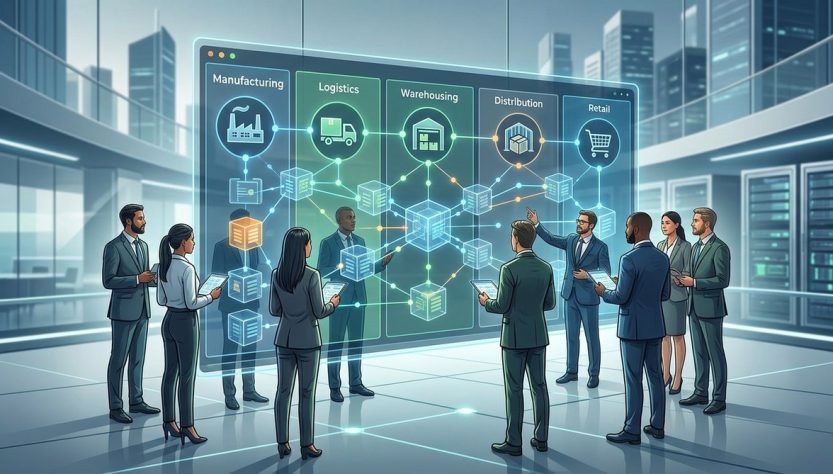
Supply chain opacity costs businesses billions every year. Counterfeit goods, delayed shipments, and regulatory violations all stem from one core problem: nobody has a complete view of what’s happening between raw material and final delivery.
Blockchain technology changes that equation fundamentally. Instead of relying on fragmented databases and paper trails, enterprises can now track every movement, transaction, and handoff on a shared ledger that no single party controls.
Blockchain supply chain transparency creates an immutable record of product journeys from origin to customer. Enterprise consortia use distributed ledgers to verify authenticity, automate compliance, reduce fraud, and build trust across trading partners. Real implementations show 30-40% reductions in documentation time and measurable improvements in dispute resolution speed.
Why Traditional Supply Chains Struggle with Visibility
Most supply chains operate on disconnected systems. Your supplier uses one ERP platform. Your logistics partner uses another. Your customer has a third system entirely.
Data gets trapped in silos. When a shipment goes missing or a quality issue surfaces, teams spend days chasing paper trails and email threads. By the time you identify the problem, the damage is done.
Consider a typical pharmaceutical supply chain. A drug manufacturer in India ships to a distributor in Singapore, who sends it to pharmacies across Southeast Asia. Each handoff creates a new record in a different system. If counterfeit products enter the chain, pinpointing the source becomes nearly impossible.
This fragmentation creates four major problems:
- Limited traceability: You can’t track products beyond your immediate trading partners
- Slow response times: Recalls and quality issues take weeks to resolve
- Fraud vulnerability: Bad actors exploit gaps between systems
- Compliance headaches: Regulators demand documentation that’s scattered across dozens of databases
How Distributed Ledgers Transform Supply Chain Operations
Blockchain solves these problems by creating a single source of truth that all participants can access. Every transaction gets recorded on how distributed ledgers actually work in a way that prevents tampering or deletion.
When a pallet of goods moves from warehouse to truck, that transfer gets logged. When temperature sensors detect a cold chain break, that event gets recorded. When customs clears a shipment, that approval becomes part of the permanent record.
The magic happens because everyone sees the same data at the same time. Your supplier in Vietnam, your logistics partner in Malaysia, and your warehouse in Singapore all access identical information. No more phone calls asking for shipment status. No more conflicting records.
Here’s what makes blockchain different from traditional databases:
Immutability: Once data gets written to the chain, nobody can alter it without leaving evidence. This creates accountability at every step.
Decentralization: No single company controls the ledger. All consortium members maintain copies, preventing any one party from manipulating records.
Transparency: Authorized participants see the same information in real time. Everyone knows what everyone else knows.
Automation: Smart contracts execute automatically when conditions are met, eliminating manual paperwork and reducing errors.
Five Ways Enterprises Use Blockchain for Supply Chain Transparency
1. Product Authentication and Anti-Counterfeiting
Luxury goods, pharmaceuticals, and electronics all face counterfeiting challenges. Blockchain creates digital twins for physical products, making fakes easy to spot.
De Beers tracks diamonds from mine to retail using blockchain. Each stone gets a unique identifier recorded on the ledger. Buyers can verify a diamond’s origin, cut history, and chain of custody with a simple scan.
The same approach works for any high-value product. Wine producers in France use blockchain to prove bottle authenticity. Sneaker brands combat fake merchandise by registering genuine products on distributed ledgers.
2. Real-Time Shipment Tracking
Traditional tracking systems show where a package is right now. Blockchain shows where it’s been, who handled it, and what conditions it experienced along the way.
Maersk and IBM built TradeLens, a blockchain platform that digitizes shipping documentation. Instead of paper bills of lading that take days to process, customs officials access verified digital records instantly. The platform reduced documentation processing time by 40% in pilot programs.
Temperature-sensitive cargo benefits especially. Pharmaceutical shipments require constant refrigeration. IoT sensors feed temperature data to the blockchain every few minutes. If a container warms up, all parties get alerted immediately. The permanent record proves compliance or identifies where the cold chain broke.
3. Supplier Verification and Compliance
Knowing your direct suppliers is easy. Knowing their suppliers is harder. Knowing the entire upstream chain is nearly impossible without blockchain.
Companies concerned about ethical sourcing use blockchain to trace raw materials to their origin. Volvo tracks cobalt from mines to electric vehicle batteries. The blockchain record proves the cobalt came from responsible sources, not conflict zones.
This verification extends to certifications and compliance documents. Organic food producers record inspection reports on the blockchain. Importers verify organic certification without contacting certifying bodies directly. The trust comes from the immutable record, not from trusting individual actors.
4. Automated Payments and Smart Contracts
Payment disputes waste enormous time and money in supply chains. Blockchain smart contracts eliminate most disputes by automating payment when delivery conditions are met.
Here’s how it works in practice:
- Buyer and seller agree on terms and encode them in a smart contract
- IoT sensors or manual confirmations verify delivery
- The smart contract releases payment automatically
- All parties see the same transaction record
No invoices. No payment reminders. No reconciliation headaches. The contract executes when conditions are satisfied, and the blockchain records the transaction permanently.
5. Recall Management and Quality Control
When products need recall, speed matters. Every hour of delay puts more consumers at risk and increases liability exposure.
Walmart uses blockchain to track produce from farm to store. When romaine lettuce caused E. coli outbreaks, Walmart traced contaminated batches to specific farms in seconds instead of days. The company could remove affected products from shelves while leaving safe inventory in place.
Traditional systems would have required pulling all romaine lettuce, causing massive waste and lost revenue. Blockchain’s granular traceability made surgical recalls possible.
Implementing Blockchain Transparency in Your Supply Chain
Moving from concept to production requires careful planning. Here’s a practical roadmap based on successful enterprise deployments:
Step 1: Identify Your Transparency Problem
Don’t implement blockchain because it’s trendy. Implement it because you have a specific problem that blockchain solves better than alternatives.
Ask yourself:
- Where do we lose visibility in our supply chain?
- Which compliance requirements create the most paperwork?
- How much time do we spend resolving disputes with partners?
- What would happen if we could trace every product to its origin?
The answers point to your use case. Maybe you need better cold chain monitoring. Maybe counterfeit products are eroding brand trust. Maybe customs delays are killing margins.
Step 2: Choose Between Public and Private Architectures
Supply chains typically use permissioned blockchains where known participants join by invitation. This differs from public blockchains like Bitcoin where anyone can participate.
Public vs private blockchains each have tradeoffs. Private networks offer better privacy and performance. Public networks provide stronger decentralization and censorship resistance.
Most enterprises choose private architectures like Hyperledger Fabric for supply chain applications. These platforms let you control who sees what data while maintaining the core benefits of distributed ledgers.
Step 3: Build Your Consortium
Blockchain supply chain solutions require multiple participants. You can’t create transparency alone when goods move through a dozen companies.
Start with your most critical partners. If you’re a manufacturer, invite your top suppliers and logistics providers. If you’re a retailer, bring in key brands and distributors.
The consortium needs governance rules:
- Who can join the network?
- What data must participants share?
- How do we resolve disputes?
- Who pays for infrastructure?
- How do we handle upgrades?
Enterprise blockchain governance frameworks address these questions upfront, preventing conflicts later.
Step 4: Integrate with Existing Systems
Your ERP, WMS, and TMS systems aren’t going away. Blockchain needs to work alongside them, not replace them.
Integrating legacy systems with enterprise blockchain requires middleware that translates between old and new architectures. APIs pull data from existing databases and write relevant transactions to the blockchain.
The integration typically happens in phases:
- Connect core systems to blockchain network
- Automate data synchronization for key events
- Build dashboards that combine blockchain and legacy data
- Train teams on new workflows
- Phase out redundant manual processes
Step 5: Start Small and Scale Gradually
Don’t try to blockchain your entire supply chain on day one. Pick one product line, one route, or one compliance requirement.
Run a pilot for three to six months. Measure results against specific KPIs:
- Time to process documents
- Dispute resolution speed
- Audit preparation time
- Recall response time
- Partner satisfaction scores
If the pilot succeeds, expand gradually. Add more products, more partners, more use cases. Learn from failures without betting the entire operation.
Common Implementation Challenges and Solutions
| Challenge | Why It Happens | Solution |
|---|---|---|
| Partner resistance | Companies fear losing competitive advantage by sharing data | Use privacy controls that let partners share only what’s necessary while keeping sensitive data private |
| Integration complexity | Legacy systems weren’t built for blockchain connectivity | Invest in robust middleware and API layers that handle translation between systems |
| Scalability concerns | Early blockchain platforms struggled with transaction volume | Modern enterprise platforms process thousands of transactions per second with proper architecture |
| Data standardization | Partners use different formats and definitions | Establish consortium-wide data standards before technical implementation |
| Cost justification | Blockchain projects require upfront investment | Focus on measurable ROI metrics like reduced fraud, faster payments, and lower compliance costs |
| Skills shortage | Few teams have blockchain expertise | Partner with specialized consultants for initial deployment while building internal capabilities |
Real-World Results from Enterprise Blockchain Deployments
Numbers tell the story better than promises. Here’s what companies actually achieved after implementing blockchain supply chain transparency:
Walmart’s Food Traceability Initiative: Reduced trace time for contaminated produce from 7 days to 2.2 seconds. This improvement prevented millions in waste and protected consumer safety.
DHL and Accenture’s Pharma Tracking: Created an immutable record for pharmaceutical shipments that reduced counterfeit incidents by 80% in pilot regions. The system now tracks billions of dollars in drug shipments annually.
Everledger’s Diamond Provenance: Registered over 2 million diamonds on blockchain, giving retailers and consumers confidence in ethical sourcing. The platform expanded to wine, art, and luxury goods.
TradeLens Shipping Platform: Processes over 30 million shipping events monthly. Participants report 40% reduction in documentation processing time and 25% faster customs clearance.
Volvo’s Battery Traceability: Tracks cobalt from mine to car, ensuring ethical sourcing compliance. The system covers 100% of battery production and provides audit-ready records.
These aren’t pilot projects anymore. They’re production systems handling real volume and delivering measurable value.
“The biggest surprise wasn’t the technology. It was how much faster we could respond to problems once everyone shared the same data. A recall that used to take two weeks now takes two hours.” — Supply Chain Director, Southeast Asian Food Distributor
Avoiding Common Mistakes in Blockchain Supply Chain Projects
Learning from others’ failures saves time and money. Here are mistakes that enterprise DLT pilot projects made and how to avoid them:
Mistake 1: Technology First, Problem Second
Some projects start with “we need blockchain” instead of “we need to solve X problem.” The technology becomes the goal rather than the tool.
Fix: Define success metrics before selecting technology. If you can’t articulate the business value, don’t start the project.
Mistake 2: Ignoring Data Quality
Blockchain creates an immutable record of whatever data you feed it. Garbage in, garbage out. If your current data is messy, blockchain just makes the mess permanent.
Fix: Clean up data processes before blockchain implementation. Establish data standards and validation rules.
Mistake 3: Underestimating Change Management
New technology requires new workflows. People resist change, especially when they don’t understand the benefits.
Fix: Invest heavily in training and communication. Show teams how blockchain makes their jobs easier, not harder.
Mistake 4: Building in Isolation
Some companies try to build blockchain solutions alone, then invite partners to join. Partners resist joining systems they didn’t help design.
Fix: Include key partners from day one. Co-create governance, standards, and architecture.
Mistake 5: Neglecting Regulatory Compliance
Blockchain doesn’t automatically make you compliant. Data privacy laws, export controls, and industry regulations still apply.
Fix: Involve legal and compliance teams early. Design privacy controls that meet regulatory requirements in all operating jurisdictions.
The Singapore Advantage in Blockchain Supply Chain Innovation
Singapore’s position as a global logistics hub makes it ideal for blockchain supply chain experimentation. The government actively supports distributed ledger adoption through initiatives and regulatory clarity.
What Singapore banks are actually doing with blockchain technology shows how financial institutions are building infrastructure that supports supply chain finance on blockchain rails.
The Monetary Authority of Singapore runs Project Ubin, testing blockchain for payments and securities settlement. These experiments create technical foundations that supply chain applications can build on.
Singapore’s port, one of the world’s busiest, provides a natural testing ground. When shipping companies, port operators, customs authorities, and logistics providers collaborate on blockchain pilots, they’re working with real volume and real complexity.
This ecosystem effect matters. A blockchain solution tested in Singapore’s high-volume, multi-party environment proves itself under conditions that exist in few other places.
Building Your Business Case for Blockchain Transparency
CFOs and boards want numbers, not technology enthusiasm. Building a business case for blockchain requires quantifying costs and benefits clearly.
Cost Categories:
– Platform licensing or development
– Integration with existing systems
– Training and change management
– Ongoing maintenance and support
– Consortium participation fees
Benefit Categories:
– Reduced fraud and counterfeiting losses
– Faster payment cycles and improved cash flow
– Lower compliance and audit costs
– Decreased dispute resolution time
– Improved recall response and reduced liability
– Enhanced brand value from transparency
Most successful business cases focus on one or two major benefits rather than trying to quantify everything. If you can show $2 million in annual fraud reduction against $500,000 in implementation costs, you have a compelling story.
The intangible benefits matter too. Customer trust, brand reputation, and competitive differentiation all have value, even if they’re harder to measure precisely.
What Comes Next for Blockchain Supply Chains
The technology keeps improving. Current developments point to three major trends:
Interoperability: Early blockchain networks operated in isolation. New standards let different blockchains communicate, allowing data to flow between consortia without forcing everyone onto one platform.
IoT Integration: More devices feed data directly to blockchains without human intervention. Smart containers, RFID tags, and environmental sensors create automatic audit trails.
AI Analysis: Machine learning algorithms analyze blockchain data to predict delays, identify fraud patterns, and optimize routing. The immutable data creates perfect training sets for AI models.
These improvements make blockchain supply chain transparency more accessible to smaller companies. What required custom development two years ago now comes as configurable platforms.
Making Blockchain Supply Chain Transparency Work for Your Organization
The question isn’t whether blockchain will transform supply chains. That’s already happening. The question is whether your organization will lead the transformation or scramble to catch up later.
Start by identifying one painful transparency gap in your operations. Maybe you can’t verify supplier certifications. Maybe recalls take too long. Maybe payment disputes consume too much time.
Pick that one problem and explore whether blockchain solves it better than alternatives. Talk to partners who would need to participate. Look at platforms that already address similar use cases.
Don’t let perfect be the enemy of good. The companies seeing results today didn’t wait for flawless solutions. They started with focused pilots, learned from experience, and scaled what worked.
The transparency blockchain enables isn’t just about seeing more data. It’s about building trust in an increasingly complex world where products cross dozens of borders and pass through hundreds of hands before reaching customers.
That trust has real value. It reduces risk, speeds decisions, and creates competitive advantage. The companies building it today are positioning themselves to win tomorrow’s supply chain battles.